
Tarps seem simple enough — until you’re standing in the aisle trying to figure out which one to buy. Cover outdoor furniture? Protect construction materials? Set up a campsite? Stock an emergency kit? Each job has its own demands, and the wrong tarp will let you down fast.
Most people grab the first one they see and hope for the best. Sometimes that works out. More often it doesn’t — too thin, too heavy, or just wrong for the job. Knowing a bit about materials, sizing, and what those spec numbers mean will save you money and more than a few headaches.
Why Choosing the Right Tarp Matters
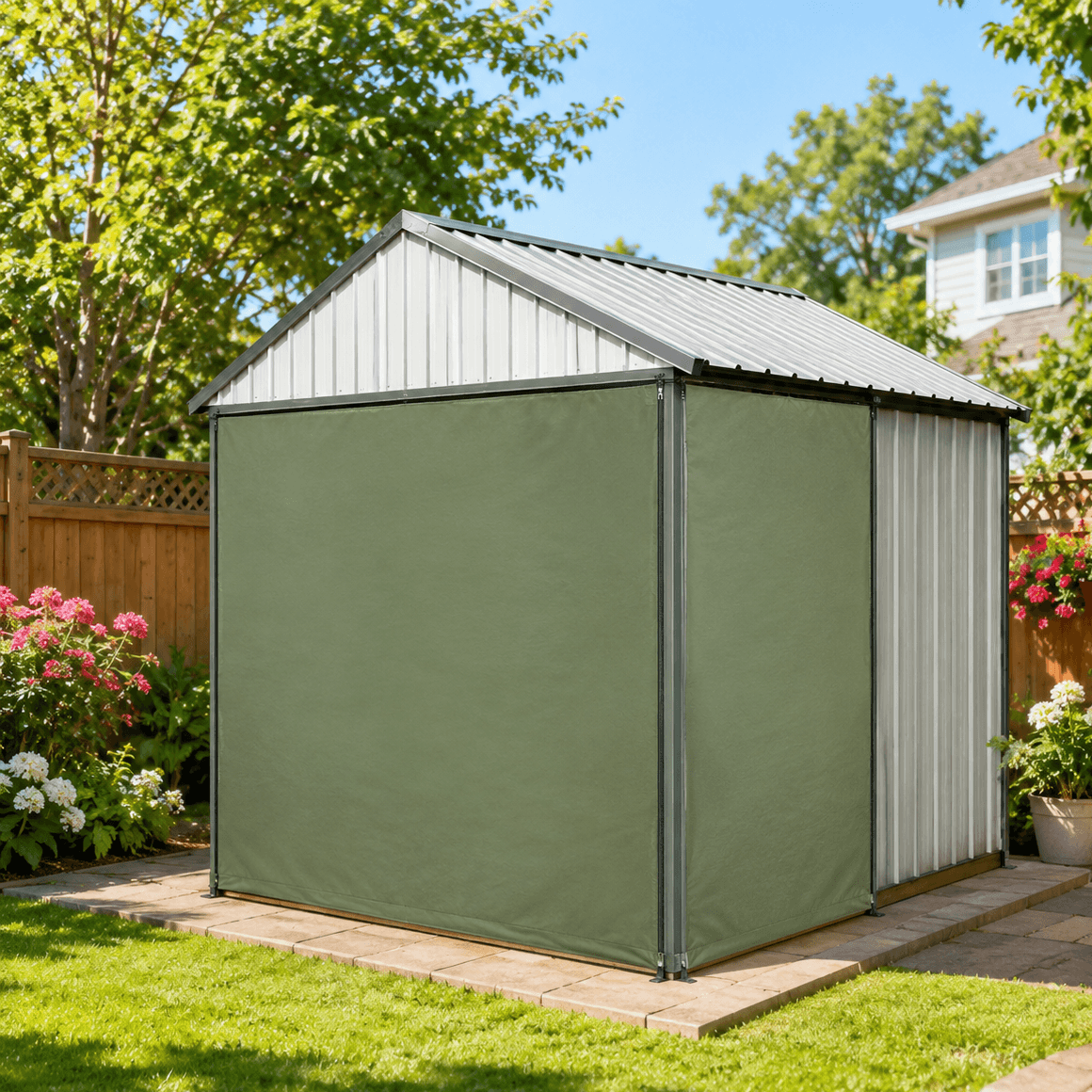
A good tarp earns its keep. It keeps your equipment dry, shrugs off bad weather, and holds together long after a cheap one would have torn or started leaking.
Choosing the wrong tarp can lead to:
- Tears and punctures
- Water leaks
- UV damage
- Excessive weight during transport
- Frequent replacements
That’s why understanding tarp materials, thickness, and construction details is essential before making a purchase.
Popular Products
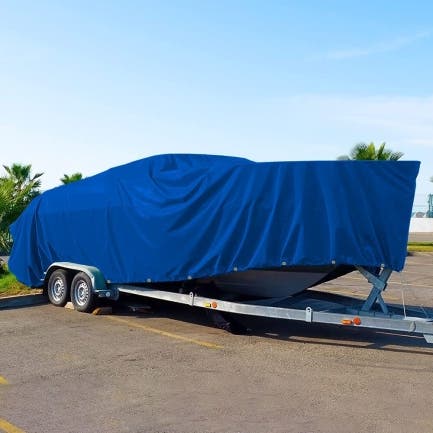
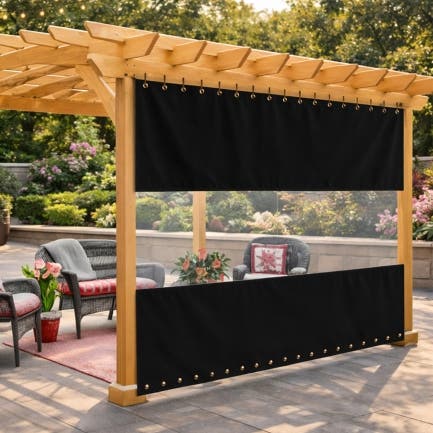

Step 1: Choose the Right Material
The material of your tarp determines its strength, flexibility, weather resistance, and lifespan.
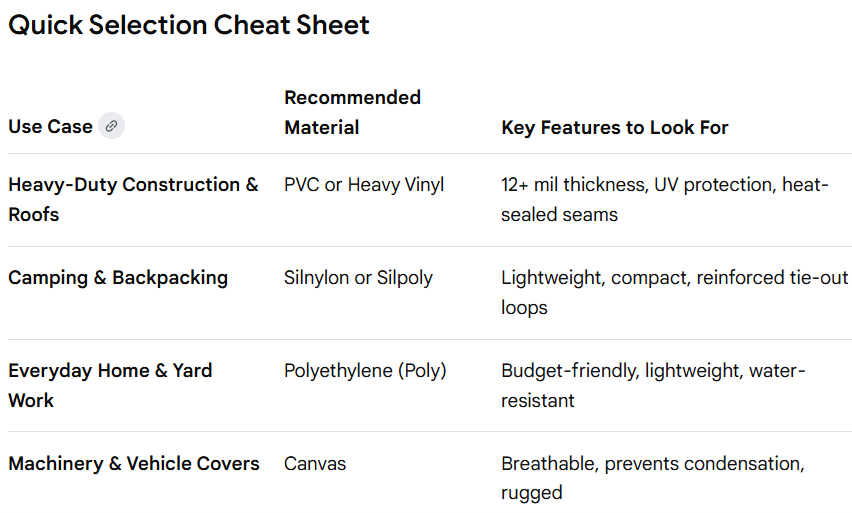
Quick Selection Cheat Sheet
Poly Tarps
Polyethylene tarps are among the most popular choices because they’re affordable and versatile.
Best for:
- Yard work
- Temporary covers
- Firewood protection
- General outdoor use
Advantages:
- Lightweight
- Waterproof
- Budget-friendly
- Easy to handle
If you’re looking for a reliable waterproof tarp for occasional use, poly tarps are often a great starting point.
Canvas Tarps
Canvas tarps are known for durability and breathability.
Best for:
- Machinery covers
- Vehicle protection
- Equipment storage
Advantages:
- Reduces condensation
- Durable construction
- Breathable material
Unlike plastic-based tarps, canvas allows air circulation, helping prevent mold and moisture buildup.
Vinyl Tarps
Vinyl Tarps are among the toughest options available and are commonly used in commercial and industrial environments.
Best for:
- Construction projects
- Long-term outdoor storage
- Truck covers
- Harsh weather conditions
Advantages:
- Highly waterproof
- UV-resistant
- Tear-resistant
- Excellent durability
When comparing materials, many buyers wonder how to choose between poly canvas and vinyl tarps for any job. In general, vinyl offers maximum durability and weather resistance; canvas provides breathability, and poly delivers excellent value for everyday applications.
Clear Tarps
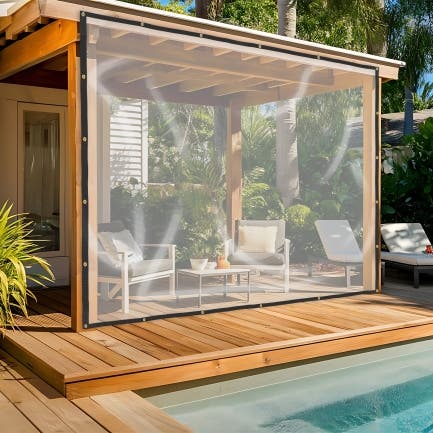
Clear Tarps provide protection while maintaining visibility and natural light.
Best for:
- Patio enclosures
- Greenhouses
- Outdoor dining areas
- Weather barriers
They offer weather protection without blocking sightlines, making them ideal for both residential and commercial applications.
Step 2: Understand Thickness and Weight
One of the most important aspects of this beginner guide to tarp sizes weights and materials explained is understanding thickness and weight ratings.
Tarp durability is generally measured in:
- Thickness (Mils)
A mil equals one-thousandth of an inch.
General guidelines:
- 5–8 mil: Light-duty
- 10–12 mil: Medium-duty
- 12+ mil: Heavy-duty
Thicker tarps typically provide better puncture resistance and longer service life.
- Weight (Ounces Per Square Yard)
Weight helps indicate overall material density and durability.
Higher weight generally means:
- Better durability
- Improved weather resistance
- Increased lifespan
However, heavier isn’t always better. Campers and backpackers often prioritize portability over extreme durability.
Step 3: Check the Features and Details
A tarp is only as strong as its weakest point. Before purchasing, examine the construction details carefully.
Grommets vs. Tie-Out Loops
Grommets are metal rings installed along the tarp edges.
Look for:
- Rust-resistant brass or aluminum
- Spacing every 18–24 inches
- Reinforced attachment points
For camping applications, fabric tie-out loops are often preferred because they distribute tension more evenly and reduce the risk of tearing.
This is particularly important if you’re researching what type of tarp is best for camping and outdoor use.
Reinforced Edges
High-quality tarps often include rope-reinforced hems sewn directly into the perimeter.
Benefits include:
- Reduced fraying
- Better tear resistance
- Improved durability under tension
This feature is especially valuable when purchasing a heavy duty tarp for long-term outdoor use.
Heat-Sealed Seams
Premium tarps frequently use heat-sealed seams instead of stitched seams.
Advantages:
- Better waterproof performance
- Improved durability
- Reduced leakage risk
Heat-sealed construction is a major indicator of quality for heavy-duty applications.
UV Protection
Continuous sun exposure can degrade tarp materials over time.
Look for UV-treated materials if your tarp will be exposed to:
- Direct sunlight
- Hot climates
- Long-term outdoor storage
UV protection significantly extends the life of outdoor tarps.
Color Coding
Many manufacturers use colors to indicate strength levels.
Common examples include:
- Blue: Light-duty
- Silver or Green: Heavy-duty
- Black or White: Super heavy-duty or enhanced UV protection
While not standardized across all brands, color can provide a useful starting point when evaluating options.
Choosing the Right Tarp Size
Size selection is another common challenge for first-time buyers.
Before purchasing:
- Measure the area you need to cover.
- Account for draping and tie-down space.
- Consider environmental factors such as wind and rain.
Remember that tarp sizes are often listed as cut sizes rather than finished sizes, meaning the final dimensions may be slightly smaller.
Best Heavy-Duty Tarps for Construction Camping and Emergency Use
Different situations require different levels of durability.
Construction Sites
Recommended:
- Vinyl tarps
- PVC tarps
- Reinforced heavy-duty models
Look for:
- 12+ mil thickness
- UV resistance
- Heat-sealed seams
Camping and Backpacking
Recommended:
- Silnylon
- Silpoly
Look for:
- Lightweight design
- Compact storage
- Reinforced tie-out points
Emergency Preparedness
Recommended:
- Heavy-duty poly tarps
- Waterproof vinyl tarps
Look for:
- Waterproof construction
- Tear resistance
- Easy deployment
These are often considered among the best heavy duty tarps for construction camping and emergency use because they balance protection, durability, and versatility.
When Should You Consider Custom Tarps?
Standard sizes don’t always provide the perfect fit. Custom tarps are ideal when you need:
- Exact dimensions
- Specialized cutouts
- Unique shapes
- Enhanced protection for valuable equipment
Tailor-made tarps are made to fit everyone, which means they often fit no one perfectly. Get one made to your dimensions, and you’ll notice the difference immediately — better coverage, cleaner look, less hassle.
For businesses, equipment owners, and homeowners with specific requirements, custom tarps often deliver better long-term value than generic alternatives.
Final Thoughts
The best tarp isn’t necessarily the thickest or most expensive one. It’s the tarp that matches your specific needs. This tarp buying guide for beginners how to choose the right type focuses on three key factors:
- Material
- Thickness and weight
- Construction features
Whether you need a waterproof tarp for outdoor storage, a rugged heavy duty tarp for construction work, durable Vinyl Tarps for long-term protection, or Clear Tarps for visibility and weather resistance, understanding these fundamentals will help you make a smarter purchase.
By choosing the right material and paying attention to quality details, you’ll get better performance, longer lifespan, and greater value from your investment.
0 comments